

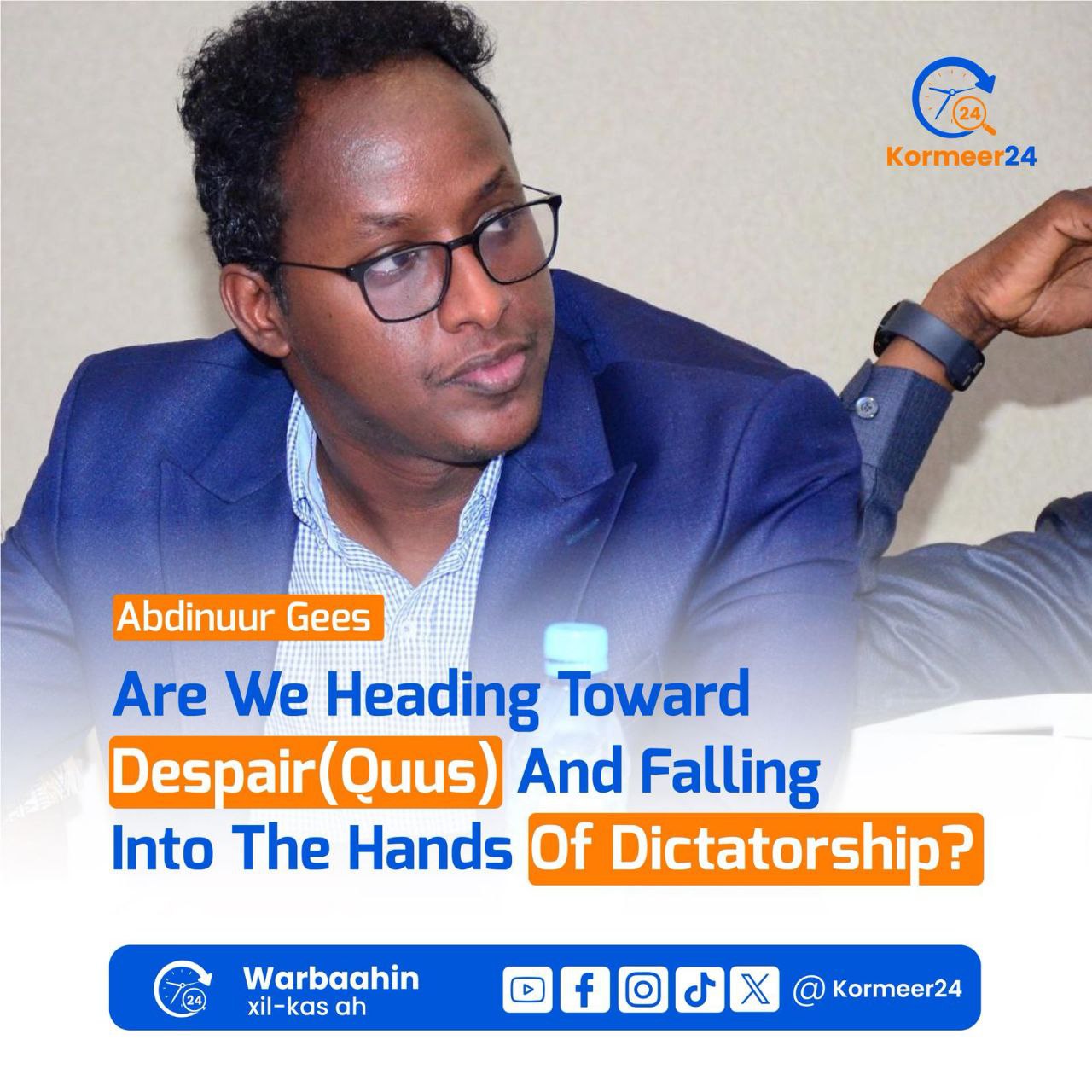
For more than the past decade, Somali politics has been dominated by a small group of politicians. Most of them have previously held senior political positions such as presidents, prime ministers, and ministers. It is widely believed that the wealth and strategic networks they built while in office have enabled them to remain within Somalia’s political arena without exit. For some, this has even allowed re-election, such as President Hassan Sheikh Mohamud, whose second term is now nearing its end. Nevertheless, the majority of Somalis believe that this leadership has not changed anything, nor has it redirected Somalia away from the long-standing political deadlock toward a viable path forward.
At this point, there is a real risk that the Somali public may become disillusioned with this endless political cycle where the same seats are repeatedly exchanged, and each new leader adds nothing of substance. This situation could enable the leadership in power to exploit public frustration with this repetitive system (Iska daba wareeg) by labeling opposing politicians as agents of regression. In doing so, this may push through opportunistic and self-serving electoral laws, encouraging the adoption of reckless and short-sighted decisions. From there, a dictatorial mindset could take root, further burying the hopes of Somali state-building.
To prevent this from happening, Somali intellectuals and thought leaders must independently guide society and clearly demonstrate a viable path toward state-building under all circumstances.
